Three prototype enhancements
We have added a exhaust control solenoid to reduce wasted oxygen, replaced all three sensors, and added a heated humidification chamber. The new sensor data has been captured and sent to our amazing team of software engineers around the world who are developing the algorithms that will control the ventilator.

Partnership with Modelon
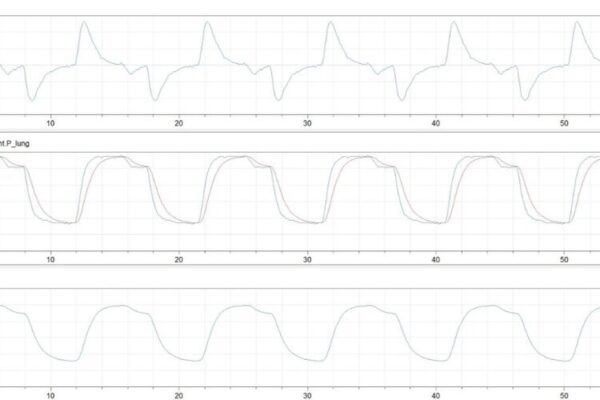
Our supporters at Modelon contributed software licenses and volunteered person-hours of senior staff. Within days, we had a model of the ventilator and a simulated patient running on Modelon Impact, using Modelon Pneumatics Library, and could start developing and testing control algorithms.
Partnership discussion with Fogel
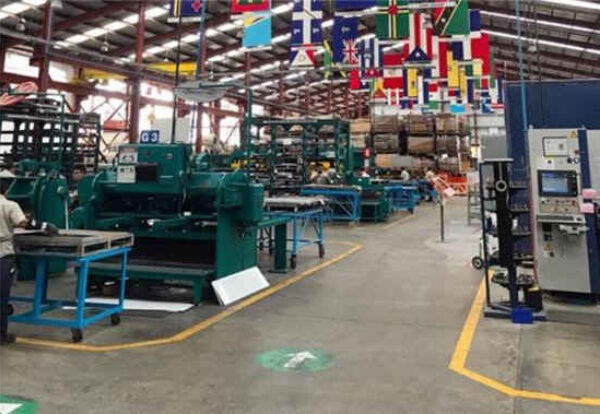
In an effort to expedite the assembly, test, and distribution of the RespiraWorks ventilator, the team has had preliminary conversations with Fogel of Central America, a commercial refrigeration design, manufacture, and distribution company based in Guatemala City, Guatemala. Fogel's ISO certified quality program coupled with experience in fabrication, part sourcing, assembly & testing lends itself well to the goal of the team and would make them an ideal partner in this venture.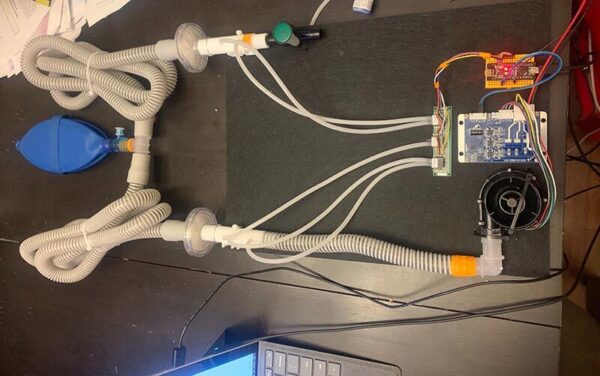
Tidal volume sensing
We’ve added inflow and outflow flow sensing which we can use to measure the tidal volume received by the lungs of the patient. Having dual flow sensors allows us to put all the sensors inside the ventilator and eliminates the need for a flow sensor in the patient branch which would need to be discarded after each use. Additional video here.
New flow sensor
Here’s an update for our blower-driven design. We’ve added a type of flow sensor called a pneumotachograph. This allows the software to observe the volume of air that is actually entering and exiting the patient’s lungs, known as the Tidal Volume (TV), which gives critical feedback to caregivers about the condition of the patient’s lungs. Some of the adjustments to ventilator settings can be automated based on this feedback, known as Pressure-Regulated Volume-Controlled ventilation (PRVC).
Fixed volume concept
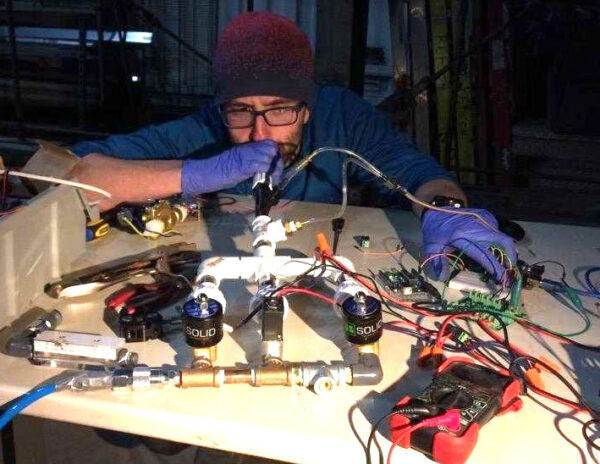
While we work on our main concept, we’re still exploring other ideas. This is our fixed volume concept, using flow orifices and solenoid valves to control the flow of running of compressed air/oxygen. We don’t have controls yet, so here we’re testing the ventilator concept by manually actuating with a human test lung. Not recommended.
Modelon simulations
Here are the results of early simulations from our partners at Modelon.
Starting software development
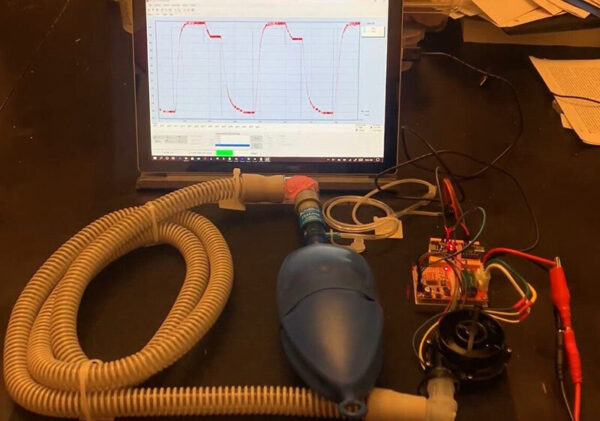
Here’s one of our three prototypes starting the software development process. This morning, we had a call with a process controls company who offered 6 of their engineers to help build and debug.
Page 5 of 6 pages